
ER-1, ER-2, ER-3: three recteq error codes, and somehow no two troubleshooting pages agree on what all three actually mean.
Our pellet grill guide gets into why so many brands' troubleshooting docs split symptoms the wrong way. recteq's error-code library is a good example of that split cutting in a genuinely useful direction instead, once you know which axis actually matters.
recteq's own support library confirms exactly three error codes exist across its Bullseye and Wi-Fi controller lineup. One of them means two completely different things.
Both guides ranking above recteq's own site for "recteq error codes" skip a few things worth knowing. Neither one links to or quotes recteq's official articles directly, and neither brings in a single independent owner report. The bigger gap: neither flags that ER-3's more alarming cause is listed first, even though it isn't the one recteq's own support flow is actually built around.
A shorter code list sounds simpler at first glance. In practice it means the fix on the screen depends more heavily on the symptom you're actually seeing, not just the digit next to "ER." That's the branch this guide walks through code by code.

ER-1, the Power Failure Code
You go out to check on dinner and the screen is just dark, or it's showing ER-1 instead of your setpoint. Your first thought is probably the worst one: the controller's dead.
It usually isn't. recteq's own documentation ties ER-1 to exactly one thing, a power failure, not a controller fault. Either the grill wasn't turned off properly last time, or a breaker or GFCI outlet cut power partway through this cook.
Go check the outlet before you touch anything else. See if the GFI switch or breaker has flipped, and reset it if it has. recteq also recommends running the grill on a GFI or GFCI outlet in the first place, which cuts down on how often you'll see this code at all. Neither step means opening the grill or touching anything electrical beyond the outlet itself.
ER-2, the Failure-to-Light Code
You've got pellets in the hopper and the power's on, but 30 minutes in the grill still hasn't reached temperature, and now it's flashing ER-2 at you.
That's a real threshold, not a vague symptom. recteq's documentation defines ER-2 as the grill failing to reach 180 degrees within 30 minutes of startup, with an auger jam or pellet bridge named as the cause.
We've covered this one in depth already, including four other "not heating up" symptoms that show up with no code on the screen at all, in our recteq not heating up guide. Go there if your grill is slow, swinging, or uneven rather than outright refusing to light. This section stops here on purpose, so we're not duplicating that deeper breakdown.
ER-3, Overheating or a Failed Probe
This is the one that actually makes you nervous. It's worth slowing down before you react.
recteq's own ER-3 article names two separate causes for the exact same code. One is a grease fire. The other, with no fire present at all, is a RTD probe that's failed or reading incorrectly.
If you actually see flames, stop and treat it as a fire first. recteq's own guidance is to remain calm and leave the lid shut. The U.S. Consumer Product Safety Commission publishes broader cooking-fire guidance with a stronger first step: call the fire department immediately.
Only after that does that same guidance cover smothering a small, already-contained flare-up yourself with a lid. The two sources aren't in conflict. But recteq's own article never mentions calling emergency services at all.
For anything beyond a flare-up you can immediately smother, that federal guidance is the more complete instruction to follow. It accounts for a fire that's already gotten past the point a lid alone will handle.
If there's no fire and you're just seeing the code, the probe is by far the more likely branch. recteq's own next step for ER-3 is to contact customer support about a possible RTD probe replacement. It doesn't say to dispatch emergency services, which is a real signal about which cause its own support flow expects most often.
recteq's separate RTD Troubleshooting article names a common non-failure cause worth checking first. The probe can get physically pushed toward the grill's interior wall, throwing off the reading. Pull it back toward the center of the grill and confirm it's completely vertical before assuming the part itself has failed.
One long-tenured recteqforum.com owner's own diagnostic experience lines up with the same read. In their account, a dirty or bent RTD probe, not a fire, is the most likely and most easily fixed cause behind the code.
Common Mistakes
Buying a replacement part before trying the free check. recteq's own RTD Troubleshooting article names a probe-position fix that costs nothing and takes a minute, and it's worth doing before you spend on a part the grill might not actually need.
Trusting a code someone else described on a forum over the one on your own screen. ER-1, ER-2, and ER-3 look similar in a quick glance at a dim display, and the fix for one does nothing for another. Confirm the exact digit before you act on it, not what a similar-sounding post online described.
Treating a slow or uneven cook the same as a hard ER-2 failure-to-light code. They call for different fixes, and our recteq not heating up guide walks through the branch that applies when there's no code on the screen at all.
Our Pick If You Suspect the Probe
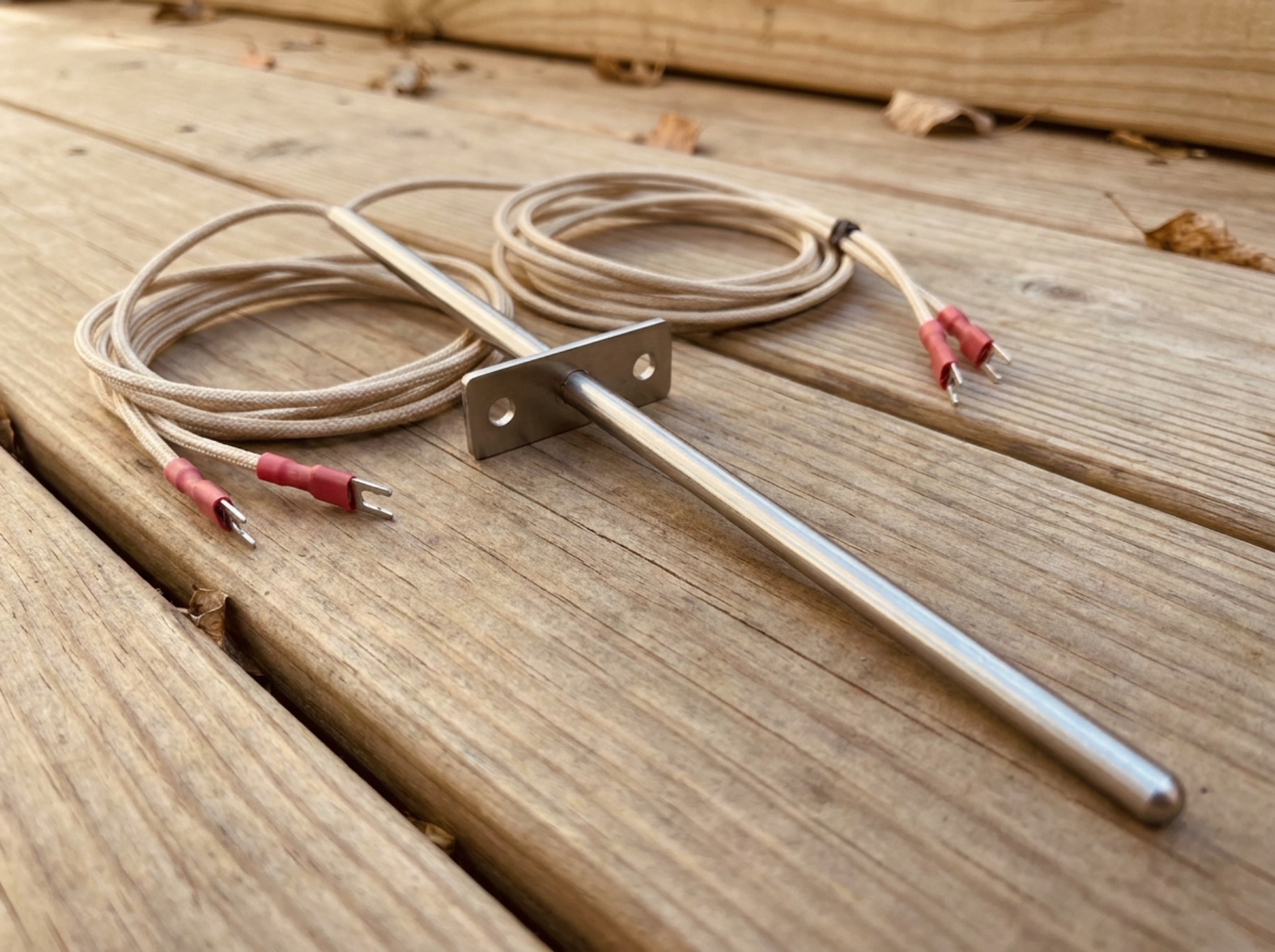
If the probe check above doesn't clear an ER-3, a replacement RTD probe is the next step recteq's own support flow points toward. No service call needed; you can install this yourself in a few minutes.

Confirm the listing matches your exact model before ordering. This probe is sized for recteq's larger grill classes, the now-discontinued RT-590 and up. It won't fit the smaller RT-300 Mini, RT-340, or RT-1250, which use recteq's own smaller probe instead.
Getting the wrong size means a return shipment before you're actually any closer to fixed. That's most of the reason to confirm the fit against your exact model before you order, rather than assume every recteq shares one probe.
Own a Pit Boss instead of a recteq? Our Pit Boss error codes guide covers that brand's equivalent code list, including the codes its own documentation doesn't independently confirm.
Frequently Asked Questions
Does ER-3 always mean my recteq is on fire?
I checked the breaker and outlet and they're fine, but ER-1 is still showing. What now?
What Works
- Sized for recteq's larger grill classes: the now-discontinued RT-590, RT-680, RT-700, RT-CMG Beast, and RT-TMG Chuckwagon
Watch Out For
- Won't fit recteq's smaller models. An RT-300 Mini, RT-340, or RT-1250 needs the smaller RTD probe instead, not this part